A Newsletter from the Greenville Zen Center
The Sitting Room
A newsletter from the Greenville Zen Center

We are friends on the path of practice.
We have sat zazen together five times now and we've begun sitting together every Sunday as of September 6. We continue to welcome new people every Sunday, and we're beginning to recognize the people who have come back to the Sangha more than once. We've also begun to get to know each other after we sit, enjoying introductions and conversations, while we have coffee and tea.
We have begun seeing ourselves as a Sangha, sharing the Zen path together and supporting each other in zazen. So what's next? We're at a "beginner's mind" moment for the Sangha, full of possibility, flexibility and openness.
In this newsletter, we'll look at ways we can continue to develop our practice together, on the cushion and off. Please continue to make suggestions to help the Sangha grow and be a place of refuge for you.
"When we look at each other, we feel confident, because everyone is practicing together in the same way and contributing to the quality of the Sangha. So we are friends on the path of practice."
Thich Nhat Hanh
Volunteer sign-ups are available on the website.
If you'd like to sign up to bring treats on a Sunday or help set up the zendo and greet people as they arrive, you can sign up at the sign-up genius on the website. If you sign-up to help with the beverages, we already have lots of supplies at the Cancer Survivors Park, including the coffee machine, hot water for tea, napkins, utensils, coffee, various teas, so we really just need treats and someone to set up and be in charge of refreshments that day.
Let's meet!
We now have a way for everyone to contact all Sangha members. If you want to meet for coffee, a hike, or some other one-off gathering, send an email to sangha@greenvillezen.org. All 170 members (so far!) will get the email, so ask for a private reply to your email address (if you need replies) so that we keep email clutter minimal for those not interested. Let everyone know what, when, where, and how to answer.
We'd like to invite GZC members to go together to sesshin.
Great Tree Zen Women's Temple near Asheville and Chapel Hill Zen Center regularly hold time for sesshin and we have members who are planning on attending in November and December.
Sesshin means “collecting the heart-mind.” It consists of a few days devoted almost entirely to zazen. The day of sitting begins early and ends in the late evening. Meals are taken formally in the hall, everyone shares in the work, and silence is kept throughout. During sesshin, you'll have a chance to meet formally with the teacher and you'll hear a Dharma talk.
If you've never been to a sesshin, the idea of it can be intimidating -- it is a formal practice with all of the rituals of formal Zen, and it's a lot of sitting -- but it's a great opportunity to let your mind settle and deepen your practice with the Sangha's support.
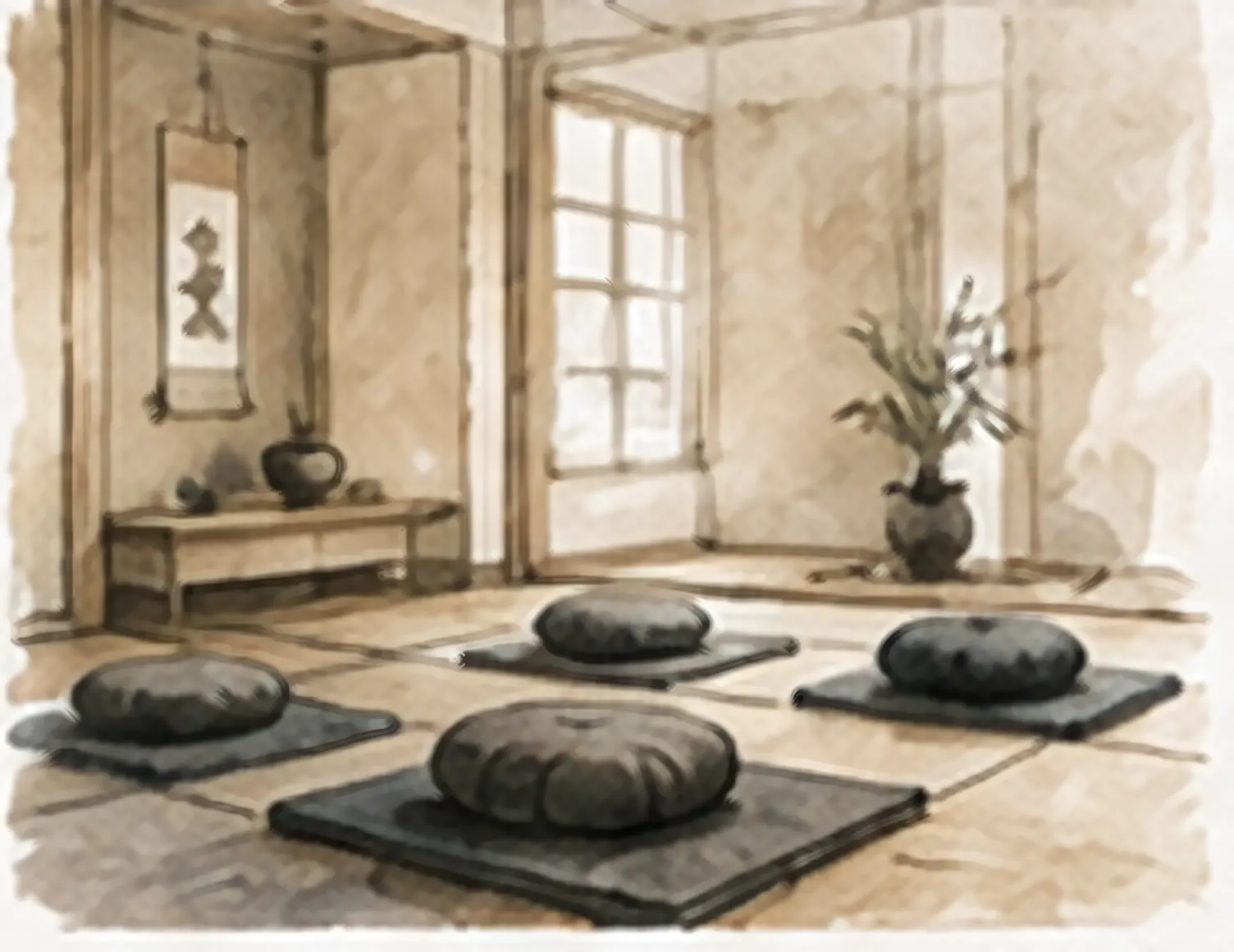
Great Tree Zen Women's Temple holds its November sesshin on the 13th through the 15th. It starts at 4:00 pm on Friday and ends at noon on Sunday. All are welcome. The Rev. Teijo Munnich, dharma heir of Katagiri Roshi, will lead the sesshin. You can learn about Great Tree on their website, greattreetemple.org. Sleeping space is available at the temple. I am a member of Great Tree, and much of how GZC sittings are organized is based on Great Tree, so if you've sat with GZC, you already have a sense of what Great Tree is like in more formal practices.
Chapel Hill Zen Center holds its Rohatsu sesshin December 11–16. Sesshin begins at 7:00 p.m. Friday and ends Wednesday afternoon. Zenki Kathleen Batson will lead it. You may attend only part of the sesshin, but Chapel Hill asks that you come to Friday’s orientation and stay for at least two days. Priority is given to people attending the full sesshin. The fee for nonmembers is $60 a day, and scholarships are available. Sleeping space is available at the Zen Center, with some additional space possibly available in members’ homes. Adam and Jay rented an airbnb close by last year. Registration and a $50 deposit are due December 2. Details and the registration form are on the Chapel Hill Zen Center events page.
If you are curious, let us know or contact Great Tree or Chapel Hill directly. We can answer questions or concerns and work out carpooling if you decide to go.
We're getting a reading group started.
We've had quite a bit of interest in a reading group with Sangha members, so I'd like to get that started. Please contact me at neighborsjl@me.com if you're interested in joining. Because this is our first reading group, I'm proposing a few books to get us started. Each book on the list has something for beginners and something for long-time practitioners, so no need to consider your experience level as a limiting factor if something interests you.
When you respond, let me know what you'd like to read. Feel free to rank your preferences if you have preferences, and let me know when you can meet (weekday evenings and/or weekend times). I'll do my best to organize us so that everyone can come. Hopefully we can make that happen with busy schedules. Once we have our book and meeting times, we can work out the reading schedule and location.
Texts to choose from for our first reading group:
Zen Mind, Beginner’s Mind by Shunryu Suzuki. A collection of transcribed informal talks of Suzuki Roshi. Suzuki Roshi talks about practical elements of zazen such as posture, breathing, and bowing, as well as some foundational concepts of Zen such as emptiness and non-duality. These talks feel intimate and expansive at once.
Opening the Hand of Thought by Kōshō Uchiyama. Another classic of Zen. Uchiyama Roshi's writing is clear and generous. He writes about sitting as a practice -- how to sit in shikantaza, attitude of mind during shikantaza -- in a clear and very practical way, and he writes about what is learned in zazen about the self and living in the world. A very good book to learn about Buddhism as well as how to practice Zen in daily life.
The Hidden Lamp: Stories from Twenty-Five Centuries of Awakened Women. Edited by Florence Caplow and Susan Moon. This is a great collection of Zen stories with commentary by contemporary women Zen teachers. The chapters are short -- each begins with a traditional story, then a short commentary, then each chapter includes a couple questions at the end which ask the reader to think about the story and commentary in a practical way. Very useful for a study group because of the questions and the expansive collection of Zen teachers. It's for all practitioners, of course.
Dōgen's Genjo Koan with Three Commentaries. Eihei Dōgen Zenji, Counterpoint Press. Commentaries by Nishiari Bokusan, Shunryu Suzuki, and Kōshō Uchiyama. This book gets the reader right into the heart of Dōgen's work, but with commentary from three of the most influential teachers of Soto Zen in the past century to help us along.
Vimalakirti and the Awakened Heart: A Commentary on The Sutra that Vimalakirti Speaks. By Joan Sutherland. This fairly short book is a commentary on one very interesting sutra. It's a great text to read when focusing on what suffering is and how to go beyond suffering while living in a world of change.
The Heart of Buddha's Teaching by Thich Nhat Hanh. A classic book that outlines -- by delving deeply into -- the core teachings of Buddhism, such as the Four Noble Truths, the Six Paramitas, and the Three Jewels.
Adam's Dharma Talk
At our last sitting, Adam read and commented on a dharma talk given by his teacher at Chapel Hill Zen Center. The talk focused on the breath -- how we can follow our breath to develop our ability to concentrate, and how awareness of our breath can keep us living in the present moment. What stood out to me from the talk was the recognition that someday we'll have an exhale without another inhale. The next breath in is never guaranteed. As a cancer survivor, the awareness of my own mortality has been a great impetus to practice -- to practice being present in the here and now because the here and now is all I will ever have. And it is good. Gassho, Adam.
How this is paid for.
There is never a charge to sit. The room, the cushions, the coffee and the tea are paid for by dāna, the old practice of giving, from the people who sit here. If you would like to help carry it, you can give once or monthly. Greenville Zen Center is a registered 501(c)(3), so your gift is tax-deductible, and we use Zeffy, so every dollar reaches the practice. No one is ever turned away.
In Gassho
Deep bows to the volunteers to who helped last week to set up the zendo, greet newcomers, organize the coffee and treats, and put everything away. Deep bows to all Sangha members for their commitment to sit together and support all of us in our practice.
Jennie Unzan Neighbors
Greenville Zen Center https://greenvillezen.org/