What Is Sōtō Zen
Just sitting.
Zen is less a set of beliefs than a way of meeting your life as it is. At its center is zazen, seated meditation, passed down for many centuries in the same simple way: person to person, sitting together. Ours is the Sōtō way, the practice of just sitting.
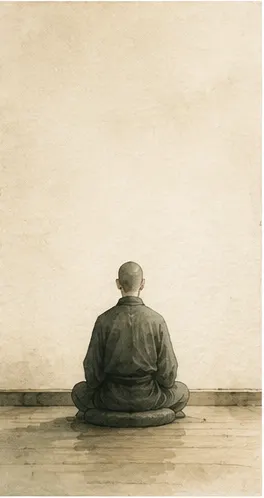
Zazen is seated meditation, the heart of the practice. We sit upright, breathe naturally, and allow the mind and body to settle. The eyes stay softly open and lowered. Thoughts, sounds, and sensations come and go, and all of it is normal, all of it is welcome.
The whole shape of it is small enough to hold in one breath:
Sit upright. Breathe naturally. Let go. Just sit.
The mind will wander a thousand times, and a thousand times you simply sit again. None of it is a mistake. Understanding can come later, because practice begins with sitting down.
Our way is the Sōtō Zen practice Dōgen called shikantaza, just sitting. Do not try to stop your thinking; let it stop by itself. When a thought comes, let it come; when it goes, let it go. You do not judge your thoughts, chase them, or push them away. They come and go like weather, and the sitting stays. Stay upright, breathe, and let go. Just sit.
Think of the mind as a mountain and the thoughts as passing clouds. The clouds drift across; the mountain stays. You are not the weather; you are the sitting itself.
There is nothing to attain. This practice is not about reaching some special state or achieving enlightenment; it is about letting go and being present. Just sitting is already letting go. It is nothing special, and that is exactly the point.
In Zen we speak of beginner's mind: the open, ready mind that does not assume it already knows. It is not a lesser mind to be outgrown, but the very mind of practice. However long you have practiced, each time you sit, you begin again.
zazen
Settle into stillness and let the breath carry your attention.
kinhin
Carry that same attention into slow, mindful steps.
again & again
You come back to the cushion, day after day. The coming back is the practice.
Sitting dates and gentle notes
One short Zen reflection, a practice for the week, and what’s happening at Greenville Zen Center. About twice a month, and you can leave anytime.
We only use your email for news about the center, and you can leave the list anytime. Read our Privacy policy.